
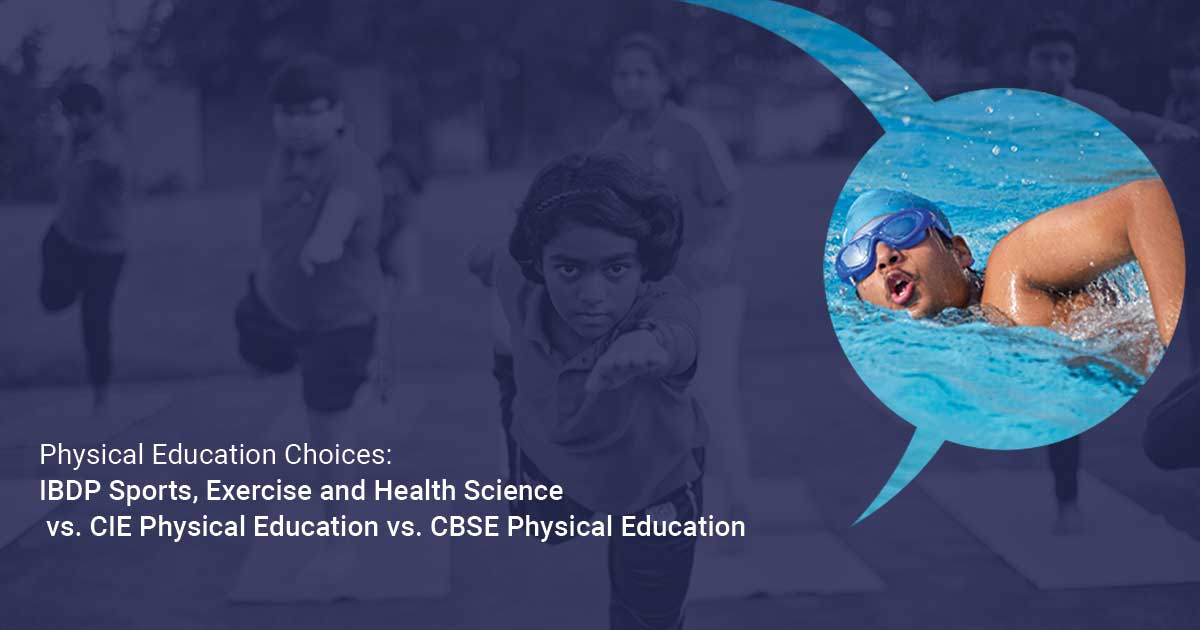
Physical education is a scoring subject in IBDP, CIE and CBSE and has practical and theoretical components. The subject touches upon physiology, various forms of physical activities, nutrition, and sports, among others. Physical education is a compulsory subject in CBSE, but in IBDP and CIE, it is an elective. If you are planning to pursue a course in sports fitness, professional sports, nutrition, or the fitness industry, then studying these subjects in the 11th and 12th standards may be a requisite for the graduate programme. Even otherwise, the knowledge and skills one cultivates through these programmes can help you make informed dietary choices and learn about physical activities that you can do to lead a healthy life.
Sports, Exercise and Health Science is a subject in IBDP under which they will learn concepts, theories, models, and techniques of the various subjects. It is offered as a Standard Level (SL) or High Level (HL) course, and you can select the subject as per the level of engagement you want. The main subjects covered in this course are –
The curriculum will include practical work, group projects, two external assessments and one internal assessment.
This subject focuses on developing physical fitness, sports skills, and knowledge of health-related topics. It involves practical activities, theory-based learning, and personal fitness assessments. The syllabus includes –
The Physical Education course in CBSE covers the following topics –
The subject delves into areas such as lifestyle disease, sports nutrition, physical activities and fitness. The subject is application-based and leads to deeper learning of physical education and management.
Physical education courses are easy-to-score subjects and can be very useful if you are planning to pursue courses in sports management, PE teacher training, nutritionist, health and wellness industry-related business or jobs. There is a great demand for fitness experts to counter the numerous lifestyle illnesses, helping people attain and maintain their ideal body shape, and assisting people in learning a new exercise form and following a healthy and nutritious diet plan. If you are looking for niche career opportunities, there is great demand for nutritionists, trainers, physiotherapists, sports psychiatrists, and others in the international sports industry.
If you are a professional sportsperson or have a passion for sports, fitness and wellness, then you will truly enjoy this subject and the career path it can lead to.
Even if you are not looking at a career directly in sports and fitness, these subjects are directly linked with the ideal lifestyle one must lead for physical and mental well-being. The subjects one learns in these courses can help you make informed choices and counter unhealthy lifestyle habits with healthy and active practices.
IBDP and CIE delve deeper into physical education courses with a wide syllabus that covers a larger number of topics. Even the curriculum design integrates theory and practical applications in the right measures to ensure the students gain a proper understanding of what they are learning. CBSE’s Physical Education course is less broad but covers the salient topics.
A1. Friedrich Ludwig Jahn is considered the father of physical education due to his pioneering work in promoting gymnastics and structured physical training in Germany.
A2. Yes. Physical education is generally considered easy in Class 12, especially if you have an interest in sports, fitness, or wellness. The subject is application-based and blends theory with practical understanding.
A3. Yes. Physical education is a high-scoring subject across CBSE, IBDP, and CIE. Its structured syllabus and practical orientation allow students to perform well with consistent preparation.
A4. Yes. Physical education is a compulsory subject in CBSE, aiming to promote holistic development and encourage physical well-being among students.
A5. Yoga and physical exercise serve different purposes. Yoga focuses on flexibility, mental calmness, and holistic wellness, while physical exercise emphasises strength, endurance, and cardiovascular fitness. Both are beneficial and can complement each other.
A6. Physical activity includes any bodily movement that enhances health, while physical education is a structured academic subject that teaches the science, techniques, and benefits of physical fitness and well-being.
A7. The aim is to develop students’ knowledge and skills in sports, fitness, health, and wellness, while promoting an active lifestyle and preparing them for related academic or professional pursuits.
Recent Blogs
Site Designed and Maintained By : Office of Communications, JAIN Group All rights reserved.