

International General Certificate of Secondary Education or IGCSE is one of the most sought-after curriculum in the ever-evolving world of education. IGCSE is a globally recognized English language curriculum, similar to CBSE or ICSE examinations. While many schools follow SSC (Secondary School Leaving Certificate), ICSE (Indian Certificate of Secondary Education) and CBSE (Central Board of Secondary Education) curriculum, several international schools follow the IGCSE curriculum.
What is IGCSE?
IGCSE was developed by Cambridge International Examinations (CIE). Since its inception, IGSCE has now become a popular choice for students aged 14-16 and has been adopted effectively by numerous educational institutions.
Why choose IGCSE Curriculum?
IGCSE Curriculum prepares students for admission to international universities in a better manner than other curriculums.
IGCSE programs are more practical and application-based. The designers of the IGCSE curriculum and the assessment in Cambridge have been determined to create a framework which supports both the teachers and the learners. Students from alternative education and adult students can also write the examination. There are Cambridge schools which allow private students to write the IGCSE examinations.
The IGCSE Curriculum is flexible and easy to adapt. The curriculum is designed in such a way that it encourages students to come up with new ideas and resources. The teachers will only provide the foundation of the syllabus while students are expected to analyze the subject matter to develop a better understanding of the same. Students are taught to become independent with minimal supervision. The IGCSE curriculum does not promote rote learning. Therefore, the students do not have to sit with heaps of notes to be memorized.
IGCSE curriculum is ideal for students who plan to relocate and pursue higher studies in foreign countries.
What are the benefits of IGCSE?
Most of the International Universities prefer students who have at least one IGCSE Certification. The assessment techniques check the problem-solving skills, time-management skills, practical and oral skills, initiative and application of skills, knowledge, and understanding. The curriculum gives an international perspective to studies and it is compelling as well. The IGCSE curriculum is moreover like a jump from State level to International level as the State board is traditionally more of rote learning whereas the IGCSE curriculum is of application-oriented learning.
How to choose IGCSE Subjects?
More than 70 subjects are offered by IGCSE. Each group in IGCSE curriculum has five subject groups with several subjects within. A student should take a minimum of five subjects and a maximum of 14 subjects. English, Mathematics, and Sciences are the core subjects. For each subject, one IGCSE Certificate will be awarded, i.e. for five subjects, five certificates will be awarded. The number of subjects needed to be taken varies from school to school.
Which International Schools in India offer IGCSE?
The best thing about IGCSE is that the age-old method of spoon-feeding of subjects is a strongly discouraged in IGCSE curriculum.
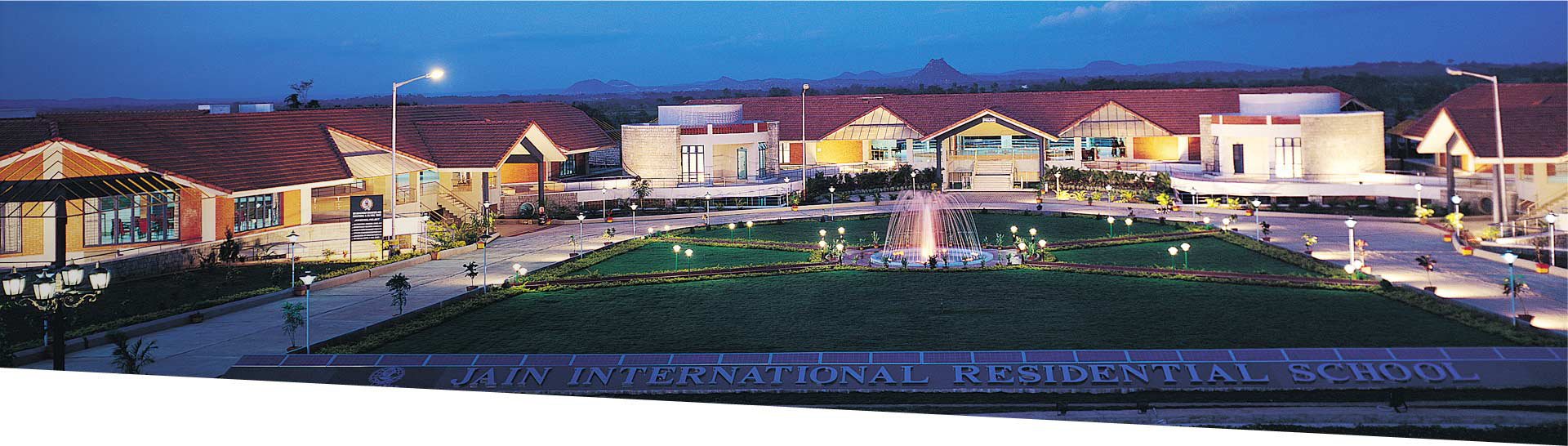
Now again, while selecting the best international school for your children, make sure to keep an eye on the city as well. The city you choose for your children is closely associated with their studies. Factors such as safety, transportation, and friendliness play an important role upon the overall performance of students. Today as we can see, most of the people opt for Bengaluru- the Silicon Valley of India. Bengaluru is home to some renowned educational institutions in India. Jain International Residential School (JIRS) is one among them. JIRS is one of the top international residential schools in Bengaluru with top-notch facilities and infrastructure. At JIRS, students are accommodated separately in well-designed dormitories. Each dormitory will have a dorm parent to take care of the needs of the children. JIRS is also known for its world-class sports infrastructure. At JIRS, both academics and extra-curricular activities are given equal importance.
Jain International Residential School started the IGCSE Curriculum in the year 2004 with grade 8 IGCSE. You can find more information about JIRS and its facilities here Jirs CBSE