

Have you ever found yourself wondering how people’s everyday choices affect the natural world? From climate change to resource use, every action we take affects our future. This is exactly what IB Environmental Systems and Societies, or ESS, helps you understand.
ESS is a distinctive subject within the International Baccalaureate Diploma Programme (IBDP) because it brings together ideas from science and social studies. Instead of looking at the environment from just one angle, you explore how ecosystems, societies, and decisions are closely linked in the world around us. ESS IB encourages you to question, analyse, and reflect on environmental issues that matter globally as well as locally.
Whether you are in the process of choosing your IB subjects or already studying ESS and want clearer direction, this guide walks you through the syllabus as well as the course structure. The guide also updates you with the latest changes in the IB ESS syllabus. However, you should begin by understanding what IB ESS is all about.
IB Environmental Systems and Societies is an interdisciplinary subject that combines concepts from science and social studies. IB ESS provides knowledge of how natural systems, such as climate and ecosystems, work and how humans interact with them. Through ESS, you explore topics such as ecosystems, biodiversity, climate change, and the use of water and food resources, all while linking them to real-world social and ethical issues.
According to the IB ESS curriculum guide, the course structure combines core topics and applied learning. You also work with case studies and fieldwork for applied learning. Assessment includes written examinations that test your understanding and application of concepts.
The IB updated the Environmental Systems and Societies syllabus. One key change, starting from August 2024, is the introduction of Higher Level (HL). The first assessments (according to the new syllabus) will take place in May 2026.
With this update, you now have the option to study the Environmental Systems and Societies IB subject in greater depth, especially if you are interested in choosing a career like an environmentalist or ecologist.
The ESS curriculum is built around three main ideas: perspectives, systems, and sustainability. You observe these ideas throughout the course.
Together, these ideas of the IB ESS syllabus help you look at environmental challenges meaningfully.
Pursuing Environmental Systems and Societies offers numerous benefits. You can also read about the learning objectives of ESS in the IB ESS curriculum guide published by the IBO. Here are the main benefits you get when you study IBDP ESS.
IBDP ESS helps you understand how human actions affect the planet and encourages responsible, sustainable thinking from an early stage.
You can choose environmental science and related courses at university in future, as the subject builds a strong academic base.
The course lets you explore real issues like climate change, biodiversity loss, and resource use, helping you see the bigger picture.
ESS strengthens your critical thinking, research, and problem-solving skills that are valuable for careers in sustainability and environmental fields.
As you explore these reasons, it also helps to understand how the ESS course is structured and what the updated IB ESS syllabus involves.
The Environmental Systems and Societies IB syllabus examines how environmental issues are linked and why they matter.
These topics guide your understanding of the relationship between environmental systems and societies. The updated ESS syllabus includes eight core topics.
As an HL learner, you study content in depth, exploring it through three specific lenses. The lenses help you develop a deeper, more critical understanding of environmental issues.
IB Environmental Systems and Societies is a strong choice for you if you want to understand and study environmental challenges while contributing to a safer, healthier planet. With the introduction of the Higher Level (HL), you also have the opportunity to explore topics in greater depth.
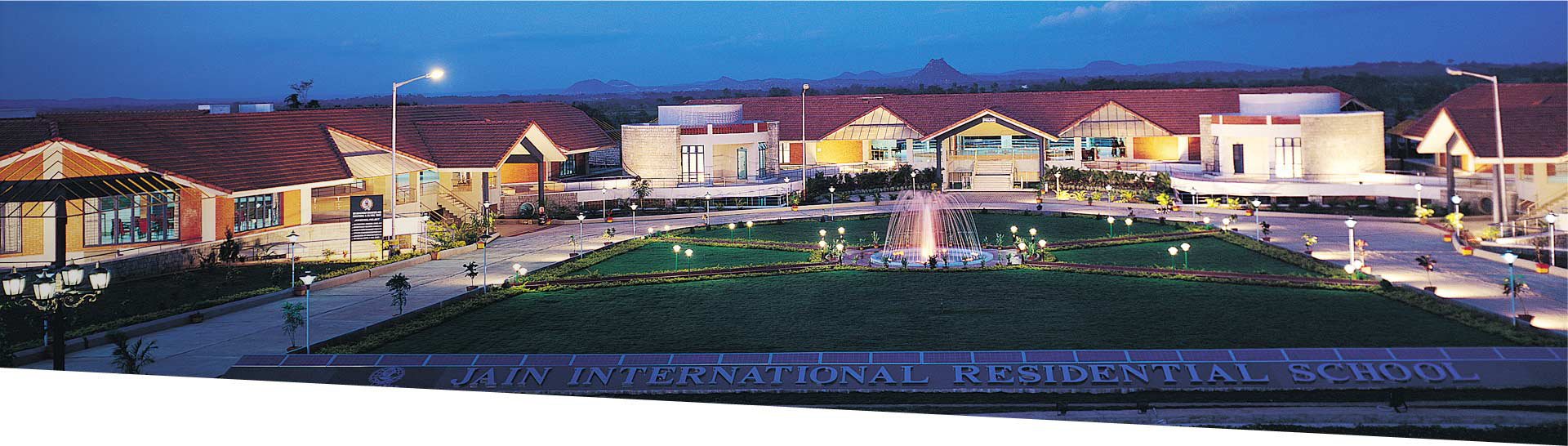
JAIN International Residential School offers the globally recognised International Baccalaureate Diploma Programme with the aim of developing a lifelong passion for learning among learners. Explore more details, apply for admission and be a part of world-class education with the IB Diploma Programme at JIRS.
A1: Environmental Systems and Societies is a subject offered under the IB Diploma Programme. The subject examines the relationship between the environment and human societies. It develops the understanding of environmental challenges and studies how everyday human actions affect the environment.
A2: IB ESS is not about being easier or tougher than other subjects. It is a unique, interdisciplinary subject. Unlike Biology, Chemistry, or Physics, it focuses less on technical depth and more on connecting ideas, using case studies, and explaining viewpoints through clear writing.
A3: You are expected to study ESS around 3 to 5 hours per week on average. However, individual learning capabilities differ. It is essential to gain a thorough understanding of the subject matter.
A4: ESS is an interdisciplinary subject that brings together concepts of Science and Social Studies.
A5: Yes, ESS is now offered in both SL and HL. IBO updated the ESS syllabus and introduced HL, that is, the Higher Level, starting from August 2024. The first assessments for the updated syllabus will take place in May 2026.
Recent Blogs
Site Designed and Maintained By : Office of Communications, JAIN Group All rights reserved.