

The International Baccalaureate (IB) Diploma is a rigorous two-year curriculum offered to learners of 16-19 years. The diploma is formally considered a secondary education credential. The programme aims to build critical thinking, global awareness, and interdisciplinary skills among graduates. This blog explores international baccalaureate careers in India and abroad after completing the IB Diploma Programme.
The IBDP curriculum is a globally recognised programme for its holistic education. The Association of Indian Universities recognises IBDP as equivalent to the Class 12 qualification from Indian boards (CBSE/ISC) for university admissions. The curriculum emphasises coursework in six subjects (3 Standard level and 3 Higher level). Subjects are offered across areas such as Languages, Sciences, Maths, Arts, and Humanities, providing wide exposure. Additionally, they must also take components such as the Theory of Knowledge (TOK) and Extended Essay and Creativity, Activity, Service (CAS). The broad curriculum thus prepares learners for university-level challenges and various real-world careers in India and abroad.
Pursuing higher education after IBDP is one of the top career options for graduates. Indian universities highly favour IB graduates for their holistic preparation. Top institutions like IITs accept IB scores as they are considered equivalent to Class 12 education. However, Engineering entrances like JEE are a mandatory requirement.
International Baccalaureate careers in India also include pursuits of careers in Liberal arts programmes at top universities, as learners are exposed to the CAS programme during the programme. This helps build skills in the field. Medicals or MBBS is also an option for IBDP graduates since the programme trains them in the deep learning of these subjects.
IB opens doors to many top universities such as Oxford, Harvard, and Stanford. The rigorous curriculum is highly valued by these universities for programme admissions. Engineering, sciences, and arts programmes value IB's curriculum. Language acquisition courses enhance eligibility for European or Asian institutions. This global recognition allows seamless credit transfers, positioning IB Diploma holders ahead in competitive admissions.
While higher education is one option, entering specialised careers is another option. This is because IB offers six subject groups, such as Languages, Sciences, Maths, Arts, and Humanities. Graduates after completing their diplomas can pursue internships in NGOs, focusing on sustainable development, outreach, and social impact projects. This builds directly on their experience from the CAS component. Some students also take gap years to do targeted internships in marketing, finance, science labs, teaching and social development before pursuing higher education. Entrepreneurship is also another viable International Baccalaureate career option for graduates to pursue.
Globally, IB Diploma graduates can find internship and apprenticeship opportunities in International Business, NGOs, and technology. These firms generally look for critical thinking and communication abilities, which IB students actively develop. The IB's focus on critical thinking and research gives graduates an advantage in securing jobs in research, medicine, and entrepreneurship.
| Aspect | Opportunities in India | Opportunities Abroad |
| University Access | Top Engineering Institutes, Medical colleges and arts programmes | Top Ivy League, Oxford, Manchester |
| Direct Careers | Counselling, nonprofits, and apprenticeships | Internships, global NGOs, business entry roles |
| Key Skills Leveraged | Scientific and logical skills for engineering entrances | Multilingual skills benefit international business |
| Challenges | Competitive exams are an additional requirement for admissions; fewer direct jobs | Higher costs of education, but more scholarships |
IB diplomas in the future will have greater university recognition and credits, increasing their value. Graduates will find more opportunities at top-tier global universities. There is also great focus on combining fields, such as the Environmental Systems and Societies (ESS) course or the World Studies Extended Essay. This will additionally prepare students for higher careers.
In conclusion, the International Baccalaureate Diploma opens up various global opportunities. The programme trains learners for the competitive career landscape. The programme offers opportunities for admission in top IITs, Ivy Leagues and other premier institutions. Counselling, opportunities in nonprofits, and tech startups are some of the other IB career opportunities. A career after IB Diploma Programme in India can also be rewarding in terms of higher education and internship opportunities. Hence, the future of the IB programme is a fulfilling and purposeful one.
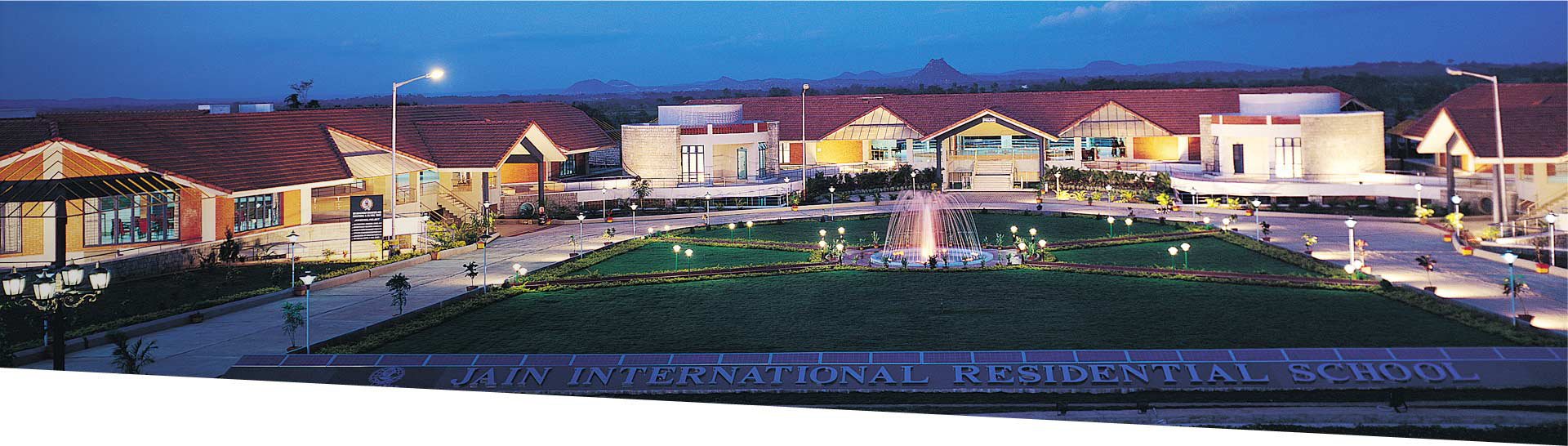
Check out the IB Diploma Programme at JAIN International Residential School, India’s top IB school.
A1.Yes, the International Baccalaureate (IB) Diploma Programme is accepted by universities in India. The Association of Indian Universities (AIU) recognises the IB Diploma as equivalent to the Class 12 qualification.
A2. The IB career opportunities in India and abroad are vast, owing to the value of the IB diploma. After completing the International Baccalaureate (IB) Diploma, graduates have a wide range of options. Pursuing higher education at universities worldwide is a primary option. Vocational training, internships or pursuing careers in liberal arts, counselling can be other options.
A3. The International Baccalaureate (IB) Career-related Programme (CP) is a specialised, three-part educational framework for learners aged 16 -19. The programme bridges academic study with practical, career-related skills. It combines at least two IB Diploma Programme (DP) courses with a career-focused study (e.g., business, engineering, health).
A4. The future for International Baccalaureate (IB) students is considered bright. Graduates will find high rates of university success, better preparedness for higher education, and strong career prospects in various fields. The graduates will be sought after by universities worldwide.
Recent Blogs
Site Designed and Maintained By : Office of Communications, JAIN Group All rights reserved.